
Highlights:
- New cars now average $49,220 at the point of sale, and the average sticker price runs even higher at around $51,595, before financing costs are factored in.
- The typical vehicle on U.S. roads is now 12.8 years old, a record high, showing that more drivers are choosing to keep cars running longer rather than replace them.
- Routine maintenance on an older car typically costs $400 to $1,200 a year, while a major repair can range from $1,000 to $5,000 or more.
- Financing a new vehicle brings hidden costs beyond the payment itself, including loan interest, higher insurance premiums, faster depreciation, and steeper registration fees.
- A useful rule of thumb: if a repair costs less than half the car’s current value and the car isn’t breaking down repeatedly, repairing it is usually the smarter financial move.
- Multiple major repairs piling up within a year, or repair costs approaching the car’s total value, are strong signs it may be time to consider buying instead.
- Comparing a repair estimate to your car’s current value, your recent repair history, and the true monthly cost of a replacement gives you a clearer, numbers-based way to decide.
If your check engine light just came on and you’re already doing mental math about trade-in values, you’re not alone. This is one of the most common financial dilemmas car owners face, and in 2026 it’s gotten a lot more complicated. New car prices are still uncomfortably high, but so are repair bills, and the car sitting in your driveway right now is probably older than you think. So which move actually saves you more money: writing a check for the repair shop, or walking into a dealership? Let’s break down the real numbers so you can make the call with confidence instead of guessing.
What a New Car Actually Costs You in 2026

Let’s start with the elephant in the room. Buying new isn’t just expensive right now, it’s historically expensive. According to Kelley Blue Book data reported by Cox Automotive, shoppers paid an average transaction price of $49,220 for a new vehicle in May 2026. That’s a slight dip from April, but it’s still up about 1.2% compared to the same time the previous year, and it sits close to the all-time high the market hit at the end of 2025. On top of that, the average sticker price (MSRP) buyers were quoted came in even higher, at roughly $51,595, with automakers leaning on incentives to close the gap between the two figures.
Here’s why that number matters so much. A near-$50,000 average purchase price isn’t just a bigger monthly payment, it changes your entire financial picture:
- Bigger loan, bigger interest bill. Financing a $49,000 vehicle at current auto loan rates can add thousands of dollars in interest over the life of the loan, on top of the purchase price itself.
- Steeper depreciation in year one. New vehicles typically lose a meaningful chunk of their value the moment they leave the lot, so a chunk of that $49,000 evaporates almost immediately.
- Higher insurance premiums. Insurers price policies based partly on the vehicle’s value, so a newer, pricier car usually means a higher monthly premium than the older car you’re replacing.
- Sales tax and fees on the full price. Unlike a repair bill, you’re paying tax on the entire purchase amount, not just the cost of a single part or service.
None of this means buying new is a bad decision. It just means the starting cost of “new” is a lot higher than the sticker price alone suggests, which is exactly why so many people are choosing to patch things up instead.
Why Americans Are Holding onto Their Cars Longer
Here’s the second half of the story, and it’s a big one. While new car prices have climbed, the average vehicle age on U.S. roads has climbed right along with them. Research from S&P Global Mobility shows the average age of vehicles in operation reached 12.8 years in 2025, the oldest the national fleet has ever been. Break that number down further and passenger cars specifically now average 14.5 years old, while light trucks average 11.9 years old. In plain terms, the typical car on American roads today is well over a decade old, and it’s still running.
This isn’t a coincidence. It’s a direct response to the affordability numbers we just covered. When a new vehicle costs close to $50,000, keeping your current car alive for a few more years suddenly looks a lot more appealing. Drivers are routinely pushing vehicles well past 150,000 miles, and in plenty of cases past 200,000, because the math on financing something new simply doesn’t pencil out the way it used to.
This shift matters for anyone trying to make sense of the buy-versus-repair decision, and it points to something worth sitting with for a minute: understanding the car ownership lifecycle is what actually determines whether a repair is a smart move or a money pit. A transmission replacement on a five-year-old car with 60,000 miles is a very different financial decision than the same repair on a fifteen-year-old car with 190,000 miles, even though the invoice might look identical.
Breaking Down the Real Cost of Fixing an Old Car
So what does it actually cost to keep an older car on the road? The answer depends heavily on whether you’re talking about routine upkeep or a major repair, and the gap between those two categories is enormous.
On the maintenance side, AAA’s cost estimates, cited in coverage from financial site Chime, put routine care at roughly $800 a year, or around $66 a month. That covers the predictable stuff: oil changes, tire rotations, fluid top-offs, and inspections. Unexpected issues are a different animal. AAA’s research pegs the typical unplanned repair between $500 and $600, though that figure balloons quickly for anything involving an engine, transmission, or major electrical system.
Other industry data backs up how wide that range can swing. RepairPal figures cited by ConsumerAffairs put annual maintenance costs somewhere between $400 and $1,200 depending on the make and model, and separate 2026 pricing breakdowns show that a basic service visit might run $95 to $237, while major work like a head gasket or transmission job can run into the thousands. It’s also worth noting that the Bureau of Labor Statistics has tracked a steep rise in overall repair and maintenance costs in recent years, so even routine work costs meaningfully more than it did just a few years ago.
Putting real numbers next to real scenarios helps make this concrete:
- Routine upkeep on an older car: roughly $400 to $1,200 per year for oil changes, brakes, tires, and inspections.
- A single unexpected repair: typically $500 to $600, based on AAA’s national averages.
- A major mechanical failure: anywhere from $1,000 to $5,000-plus for things like transmission replacement, major engine work, or extensive electrical repairs.
- Annual cost per mile driven: some estimates put total maintenance and repair costs at around 11 cents per mile, meaning a driver putting 15,000 miles a year on their car might budget somewhere around $1,650 annually.
Even at the higher end, a rough year of repairs on an old car rarely comes close to the cost of financing a new one. That’s the core financial argument for fixing rather than replacing, at least up to a point.
The Hidden Costs of Buying New
It’s easy to compare a repair estimate against a monthly car payment and assume the payment is the “real” cost of buying new. It isn’t. There’s a whole layer of expenses that show up after you drive off the lot, and they rarely make it into the initial pitch from a salesperson.
- Interest over the loan term. A $49,220 vehicle financed over five or six years, even at a reasonable rate, can rack up several thousand dollars in interest charges.
- Full-coverage insurance requirements. Lenders typically require comprehensive and collision coverage on financed vehicles, which costs more than the liability-only policy many owners carry on a paid-off older car.
- Faster depreciation. New vehicles lose value quickly in the first few years, which matters if you ever plan to sell or trade in.
- Higher registration fees in many states. Registration costs are often tied to vehicle value, so a pricier car means a pricier renewal notice.
- Opportunity cost. Money tied up in a car payment isn’t available for retirement contributions, an emergency fund, or debt payoff.
None of this is meant to scare anyone away from buying new. Sometimes it’s genuinely the right call. But stacking these hidden costs next to the $49,220 average transaction price shows why so many households are choosing to stretch the life of their existing vehicle instead.
When Repairing Makes More Financial Sense
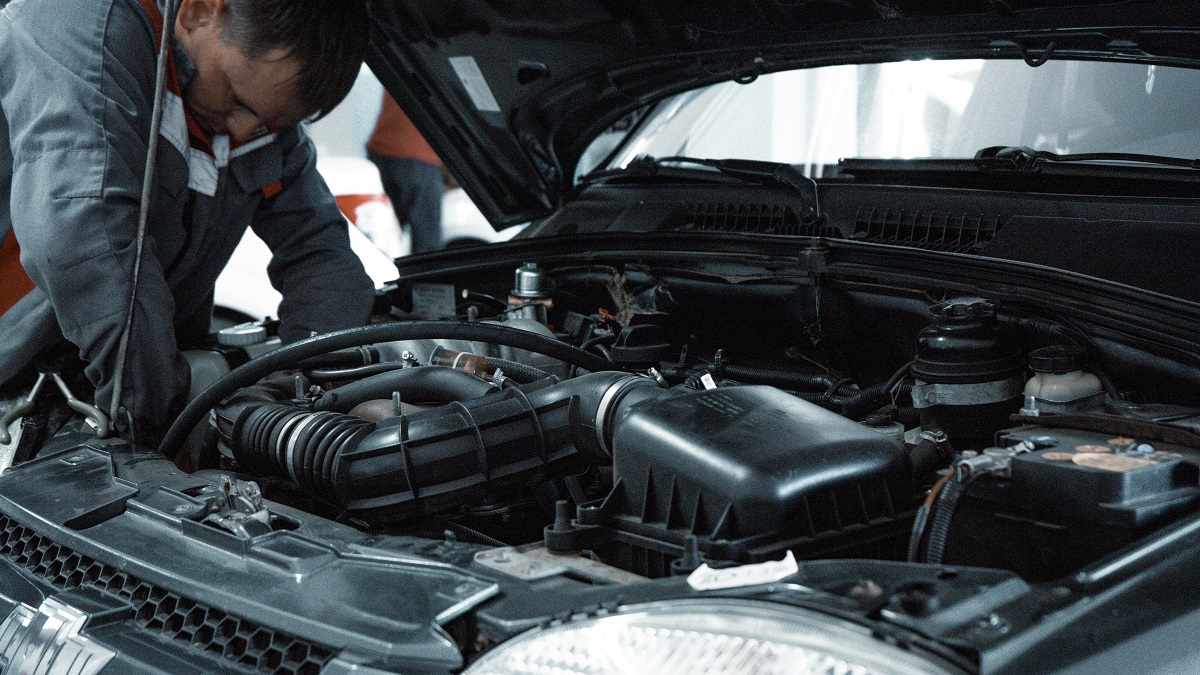
Not every repair bill is a signal to start car shopping. In a lot of cases, fixing what you’ve got is the more rational financial move, especially given how expensive new vehicles have become. Repairing tends to make sense when:
- The repair cost is meaningfully less than the car’s current market value, even if that value isn’t huge.
- The vehicle has a solid maintenance history and no pattern of recurring, expensive failures.
- You’re dealing with a single, isolated issue rather than several systems failing at once.
- You don’t have a down payment saved, or taking on a new loan would strain your monthly budget.
- The car still meets your practical needs in terms of safety, reliability, and daily usability.
A good rule of thumb that mechanics and consumer finance writers often point to: if a single repair costs less than 50% of the car’s current value, and the car doesn’t have a history of nonstop breakdowns, it’s usually worth fixing. A $1,200 repair on a car worth $6,000 is a much easier call than the same repair on a car worth $1,500.
When It’s Time to Let Go and Buy New
On the flip side, there comes a point where continuing to repair an old car stops being frugal and starts being a slow financial leak. Signs it might be time to move on include:
- Repair costs are piling up faster than they’re spacing out, with multiple major issues in the same 12-month window.
- The total of recent repairs is approaching or exceeding what the car is actually worth.
- Safety-related systems, like brakes or airbags, are becoming unreliable in ways that put you at real risk.
- Fuel economy has dropped significantly, quietly costing you money every time you fill up.
- The car no longer fits your life, whether that’s a growing family, a longer commute, or a need for more cargo or towing capacity.
If you’re seeing two or more of these at once, that’s usually a stronger signal than any single repair bill on its own.
A Simple Cost Comparison You Can Run Yourself
You don’t need a finance degree to run this math. Try this quick exercise the next time a repair estimate lands in your inbox:
- Step 1: Look up your car’s current trade-in or private-sale value using a tool like Kelley Blue Book.
- Step 2: Compare the repair estimate to that value. If it’s under half, lean toward repairing.
- Step 3: Add up what you’ve spent on repairs over the past 12 months. If that total is creeping toward the car’s value, that’s a red flag.
- Step 4: Estimate what a replacement would actually cost you monthly, including loan payments, the insurance bump, and any change in fuel or maintenance costs.
- Step 5: Compare that new monthly number to what you’re currently spending to maintain the old car.
This isn’t a perfect formula, but it turns a stressful, emotional decision into something you can actually see on paper.
What This Means for Your Wallet Right Now
Put the two big 2026 numbers side by side and the picture becomes pretty clear. New cars are averaging close to $49,220 at the point of sale, while the typical vehicle on the road is now pushing 12.8 years old. Those two trends are feeding each other. High prices are pushing people to hold onto their cars longer, and longer ownership periods are, in turn, making repair shops busier and repair costs higher. Neither side of this equation is cheap, which is exactly why the decision deserves real numbers instead of a gut reaction.
For most drivers, the smartest approach isn’t picking a permanent side in the buy-versus-repair debate. It’s running the numbers every time a repair bill shows up, staying honest about your car’s real condition, and recognizing when the math has quietly shifted in favor of a new vehicle. Do that consistently, and you’ll spend less over the life of every car you own, whether that car is five years old or fifteen.